

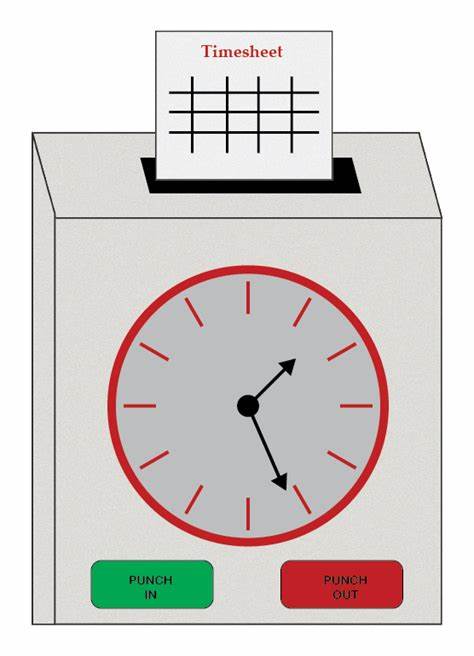
Don’t underestimate the benefit and use of timesheets to track vendors and internal resources alike. As the name suggests they record the amount of time an employee works on tasks. Timesheets are a mechanism for payroll used by management, human resources and accounting to record time and pay employees based on the proof of their total hours worked. The most common association is with time cards or time clocks.
In project management, timesheets have also become invaluable for businesses to monitor their time and keep projects on track. They can also be used as a management tool for expense tracking, capacity planning, or to estimate team availability.
There are a number of ways to create and use timesheets. The simplest is a physical, paper-based timesheet. Using a physical timesheet template saves costs, but can introduce issues such as lost timesheets and difficult-to-search archives.
Electronic timesheets can be made in Excel or Google sheets with a breakdown of tasks, project, program, client billing and more. Using an Excel timesheet template saves time and streamlines much of the payroll process. However, it can be unprofitable as it requires more time spent in inputting data and shepherding the timesheet through departments.
The third and best option is online timesheets, which show the team’s logged hours in real time. Timesheets can be auto-filled as tasks are completed, and last week’s work can be copied if recurring. A manager can be notified when timesheets are ready for approval and then locked when they’re approved; creating a seamless process that saves time and money.

Timesheets are essential to the payroll and client billing process. Employers use timesheets to record data related to an accounting of their employees’ work time to accurately pay them. To create timesheets managers must consider many variables such as their employee’s time cards, pay period, hourly rate, regular hours, overtime hours, mileage log, among others. Timesheets can be submitted weekly, biweekly, monthly or bimonthly.
Timesheets are mostly used for non-exempt employees, as it allows employers to not only pay for the hours worked, but track them to stay compliant with state and federal regulations such as the Fair Labour Standards Act. This is known as timesheet compliance, and the standards differ depending on the industry and the regulatory entities. For any firms that bill their clients regularly, timesheets work as a means to track those billable hours for each client.
There are many important uses for timesheets, from lowering costs due to inaccurate invoicing to tracking the time of the employees and using that data to adapt roles and improve performance. They act as protection against possible litigation by providing detailed records.
We’re long past the age of office workers clocking in and out on an antiquated time log sheet or time card machine, but that doesn’t mean timesheets are no longer in use to track time. In fact, their utility has only increased as project management tools have become more advanced. Today, timesheets are a very versatile time tracking tool.
Project management is modern, knowledge-based work, which requires the tracking and processing of large amounts of data in real time—and that includes time spent on tasks. Some project teams working in consultancy or agency environments will bill for the work hours that their team spends on projects using this data.


Savvy project managers, though, make full use of rigid adherence to online timesheets to identify avenues of optimization and improvement for their projects or business operations. The real value of timesheet tools is that they provide an easy way to see what the team is working on, at any time, and if that work is being properly executed.
With proper use of a project timesheet, you can easily identify:
- Who is working on what
- What tasks are still outstanding
- What tasks are going to overrun their scheduled time
- Who is really busy and logging lots of hours
- Who isn’t recording many hours and may have capacity to pick up more work to optimize team availability
- Data that will be useful for capacity planning and expense tracking

Timesheet systems generally include the following data:
- The Name of the User: This is the person who is completing the timesheet. Managers may have access to employee timesheets to complete them.
- Date: Weekly timesheets are the most popular. The date field lets you navigate through the calendar and enter your working time for a particular week.
- Project: Timesheets can group tasks by project to make it easier for the user to see what they are recording at a glance.
- Task: The list of tasks that the user has been allocated to work on that are not yet marked as complete.
- Copy Last Week: If you’re working on similar or the same tasks each week, you can auto-populate the timesheet with last week’s tasks rather than have to input them again.
- Days of the Week: The rest of the timesheet columns display the days of the week. Mark the hours worked on each task against the correct days. Some projects might demand the use of daily timesheets, which describe the tasks performed in a day and other details such as hours worked, clock in and clock out time, among others.
- Percentage Complete: See what percentage of your tasks is done.
- Auto-totals: Columns and rows will automatically total so that you can see at a glance how many hours you have worked in a day or on a particular task. This helps both employers and employees calculate total hours, regular hours, overtime hours and double time for payroll purposes.
- Submit: If an approver has been assigned, the timesheet when ready can be sent to that person to review. Electronic timesheets are easily shared online, while printable timesheets can be delivered in person.
- Notes: Add comments and upload files to timesheet entries to remind yourself of what the task was about or to note why it took longer (or less time) than expected.
You’ll also typically see lines on the timesheet that do not directly tie back to tasks on the project schedule. These lines could represent things like paid time off (PTO), team meetings, training and so on. These tasks take up time during the working week, but don’t necessarily contribute directly to a project.


When applied properly, it won’t be long before estimates improve, confidence in hitting deadlines is bolstered and project success rates increase. Let us know your opinion of timesheets and if they benefit tracking resources. We would like to hear from you, all the best on your project management journey